10 Diabetes Breakfast Ideas That Keep You Full
Morning blood sugar is at its most sensitive — so breakfast needs protein first, fibre with it, and carbs last and small. Here are ten breakfasts that follow that rule and actually keep you full.
By the FreshListStudio Team · 7 min read · Informational guide — not medical advice
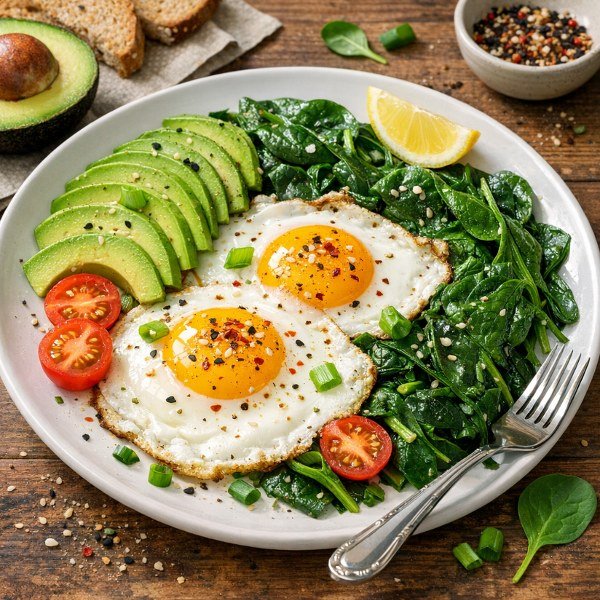
Fried eggs with avocado slices, spinach and tomatoes — the breakfast formula in one plate: eggs for protein, avocado for healthy fat, greens and tomato for fibre.
The Breakfast Rule: Protein First
Morning blood sugar is most sensitive in the morning, and a pure-carb breakfast spikes it. So: protein first — eggs, Greek yogurt, cottage cheese, tofu or fish. Fibre with it — vegetables, berries, seeds or oats. Carbs last and small — one slice of whole-grain toast, not three.
The 10 Ideas
- Veggie omelette. Two eggs, spinach, mushrooms, peppers and tomato.
- Greek yogurt berry bowl. Plain Greek yogurt, berries, chia/flax and walnuts — choose plain, not flavoured.
- Overnight oats, done right. Rolled oats soaked overnight with Greek yogurt and chia.
- Avocado and egg on whole-grain toast. One slice, half an avocado, one egg.
- Cottage cheese plate. Cottage cheese, cucumber, tomato, olive oil and black pepper.
- Spinach and feta egg muffins. Batch-baked on Sunday, grabbed all week.
- Chia pudding. Chia soaked overnight in milk or unsweetened almond milk with cinnamon and vanilla, topped with berries.
- Smoked salmon plate. Smoked salmon, cucumber, boiled egg and one whole-grain crispbread.
- Tofu scramble. Crumbled tofu, turmeric, spinach, tomatoes and onions.
- Nut butter and apple, plus an egg. Apple slices, a tablespoon of peanut butter, and a boiled egg on the side.
Breakfasts That Sit in the Red Column
- Fruit juice — even “100% juice” is fast sugar without the fruit’s fibre.
- Sweetened cereals and granola.
- White toast with jam or honey.
- Pastries and muffins.
- Flavoured yogurt pots — many carry 4–5 teaspoons of added sugar.
Breakfasts sorted, all day sorted
Keep the whole day on track with the two printables behind this blog — the one-page chart for the fridge, and the 7-day plan for the week.
Get the Diabetic Food Chart on Etsy · Get the Diabetic Meal Plan on Etsy
Prep Tip: The 2-Breakfast Rotation
Pick two breakfasts you genuinely like and rotate them. Decision fatigue is what sends people back to the cereal box.
5 Quick Tips for Breakfast
- Eat protein before carbs. Even the order within the meal helps.
- Skip the juice, eat the fruit. Whole fruit keeps its fibre; juice does not.
- Add seeds to everything. A tablespoon of chia or flax adds fibre and healthy fat to yogurt, oats or eggs.
- Walk after breakfast. Ten gentle minutes smooths the morning rise.
- Prep the night before. Overnight oats and chia pudding are tomorrow’s breakfast, made tonight.
Questions Readers Ask
1. Are oats really okay?
Yes — rolled or steel-cut oats in a moderate portion, with protein or fat alongside. Instant, sweetened oat sachets are a different food.
2. Can I eat fruit at breakfast?
Yes — whole fruit, especially berries, eaten with protein. Fruit alone is a faster rise than fruit with yogurt or eggs.
3. Is it better to skip breakfast?
For most people, skipping leads to a bigger, faster lunch spike and afternoon cravings. If you take medication, check with your care team before changing your pattern.
4. What about coffee?
Black coffee or coffee with milk is fine for most people. The problem is sugar, syrups and sweetened additions.
5. How many eggs can I eat?
Eggs are a green-column staple. If your doctor has given you personal guidance about cholesterol, follow that.
Free: the Diabetes Grocery Checklist
Every breakfast ingredient in this article, on one store-by-store printable. To request your free checklist, email freshstudiolive@gmail.com with the subject “Diabetes Grocery Checklist”. One helpful email a week. No spam, unsubscribe anytime.
Disclaimer: This article is for general information and education only and is not medical advice. It does not replace professional medical advice, diagnosis or treatment. Always seek the advice of your doctor or another qualified health professional with any questions about a medical condition.