Diabetes Grocery List: The Complete Supermarket Guide
The Diabetes Food List, rewritten as a shopping trip — green first, store by store — so the trolley fills itself with the right foods before anything else goes in.
By the FreshListStudio Team · 5 min read · Informational guide — not medical advice
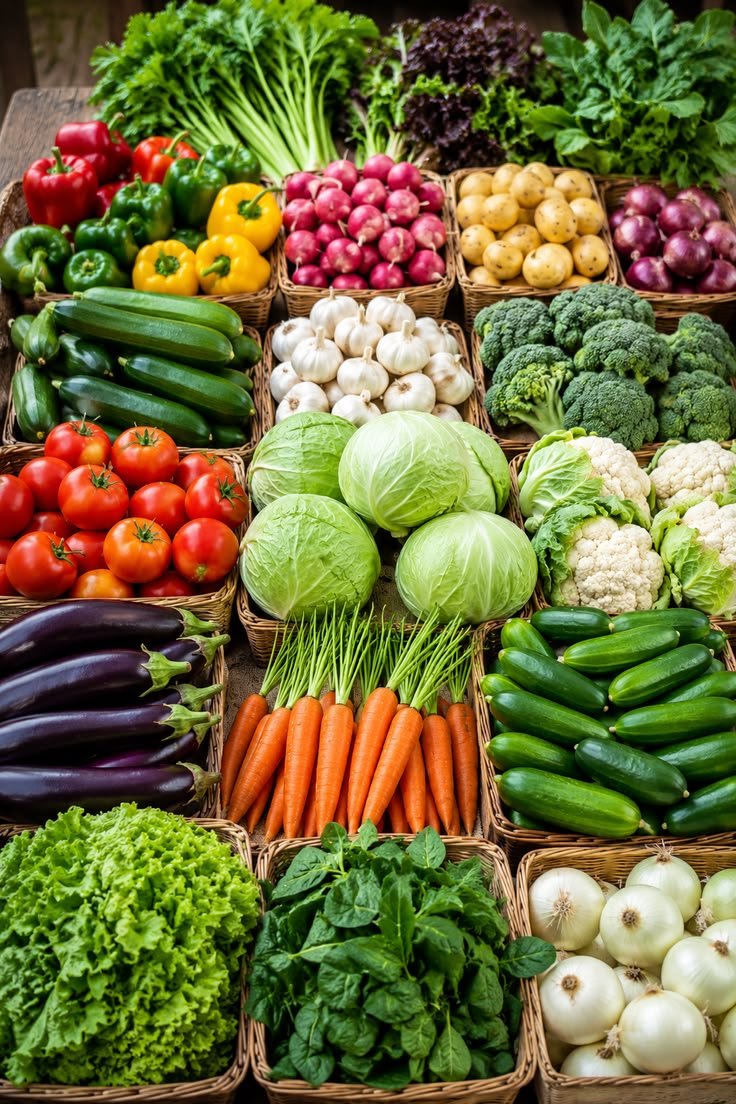
Baskets of fresh produce at a market — peppers, cabbage, carrots, broccoli and greens. Shop the produce first, and the rest of the list follows.
How to Use This List
Buy weekly: produce, protein and dairy. Buy monthly: pantry and frozen staples. The free printable version is the checklist in the box at the end of this page.
The Store-by-Store List
1. Produce
Spinach, lettuce and leafy greens; broccoli, cauliflower, green beans, zucchini; bell peppers, cucumbers, tomatoes, carrots, cabbage; avocados, lemons, garlic, fresh herbs; berries, apples, pears, citrus fruit.
2. Meat, Fish & Plant Protein
Chicken and turkey breast; salmon and one white fish; eggs — the week’s anchor, buy plenty; canned tuna in water; tofu or tempeh; lean cuts only in the Limit spirit: small packs, occasional.
3. Dairy & Alternatives
Plain Greek yogurt (0–2% or full-fat, always plain); cottage cheese; milk or unsweetened plant milk; hard cheese and feta — small amounts, big flavour.
4. Frozen
Frozen mixed vegetables and peas; frozen berries; frozen fish fillets — the busy-day backup. Skip: frozen pizzas, sweetened desserts, breaded items.
5. Pantry
Lentils, chickpeas, black beans, kidney beans (dried or canned, rinsed); rolled oats, quinoa, brown rice — intact grains; chia seeds, flax seeds, almonds, walnuts, peanut butter (no added sugar); olive oil, vinegar, mustard, spices, canned tomatoes; whole-grain bread and wraps — yellow column, smallest sensible pack.
6. Drinks
Water, sparkling water, unsweetened tea and coffee. Skip the whole sugary drinks aisle — soda, juice, sweet tea, energy drinks.
Reading Labels in 10 Seconds
- Added sugars — the one number that decides most labels.
- Fibre: 3g or more per serving is a good sign in breads, cereals and bars.
- Ingredients order: if sugar (or syrup, honey, dextrose) is in the first three, it is a sweet food in disguise.
- “Sugar-free” is not a free pass — refined starch can raise blood sugar almost as fast, so check total carbs and fibre.
The printable chart
The full Eat More / Limit / Avoid list on one fridge-ready page — and the free checklist below is the shopping version.
Get the Printable Chart on Etsy
Store Tip: Shop After a Meal
Hungry shopping is red-column shopping. Eat first, list in hand, green first.
5 Quick Tips for Shopping
- Edges first. Produce, meat, fish and dairy line the store walls.
- Green first, always. Vegetables and protein go in before anything else is considered.
- Small packs for yellow. Portion control is easier when the bag is small.
- One new food a week. Try one green-column food you have never cooked — it keeps the list from getting boring.
- Keep frozen backups. Frozen vegetables and fish turn a busy day into a green-column dinner.
Questions Readers Ask
1. Is this list more expensive?
Its backbone is cheap staples — eggs, lentils, beans, seasonal and frozen vegetables.
2. Fresh or frozen vegetables — which is better?
Nutritionally close; frozen wins on price and waste. Buy fresh for the days you will cook soon.
3. What about family members who eat differently?
The green column is ordinary food everyone can eat. Keep household treats in one cupboard, not scattered through the kitchen.
4. How do I get the printable checklist?
Use the free checklist box on this page — it arrives by email as a one-page, store-by-store printable.
5. Can I use this list if I am vegetarian?
Yes — eggs, Greek yogurt, cottage cheese, tofu, lentils and beans cover protein.
Free: the Diabetes Grocery Checklist
One page, store by store, with every food on this list. To request your free checklist, email freshstudiolive@gmail.com with the subject “Diabetes Grocery Checklist”. One helpful email a week. No spam, unsubscribe anytime.
Disclaimer: This article is for general information and education only and is not medical advice. It does not replace professional medical advice, diagnosis or treatment. Always seek the advice of your doctor or another qualified health professional with any questions about a medical condition.