Gestational Diabetes Diet: Basics & Food Choices
Informational guide — not medical advice. Pregnancy care is personal: follow your own care team first.
By the FreshListStudio Team · 8 min read
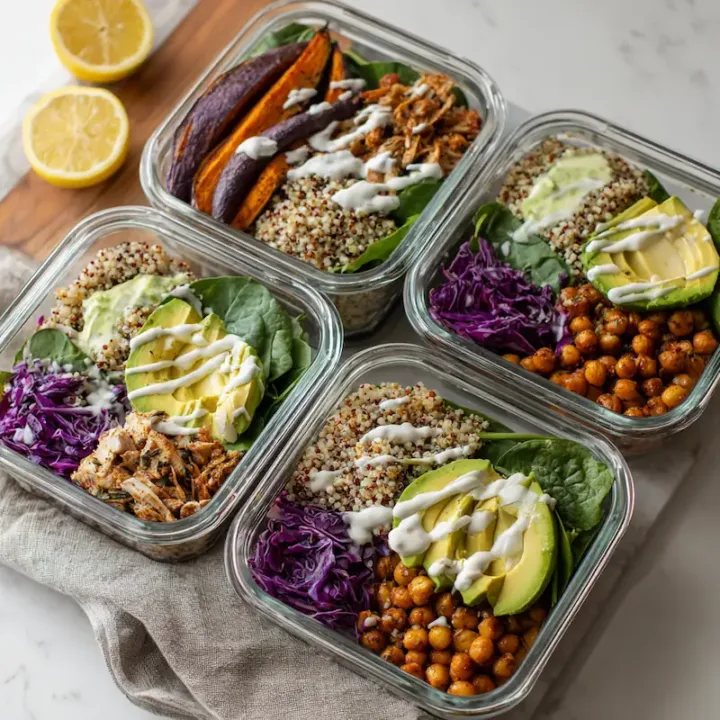
Prepared bowls of quinoa, chickpeas, avocado and roasted vegetables — small, balanced meals with protein, fibre and healthy fat at every plate.
The Basics, Calmly
Gestational diabetes is common, it is not your fault, and food is only one part of how it is managed. Three smaller meals plus two or three snacks — never one huge meal. Carbs measured and paired — always with protein, fibre or healthy fat, never alone. Breakfast is the hardest meal — morning hormones make blood sugar most sensitive, so breakfast carbs are usually the smallest. Food safety still applies: follow your care team’s pregnancy guidance on cheeses, eggs, fish and reheating.
Build On
Proteins: eggs (cooked through), chicken & turkey, fish within your care team’s pregnancy guidance, plain Greek yogurt & pasteurised cheeses. Vegetables & Fibre: leafy greens & salads, broccoli, beans, peppers, zucchini, lentils & chickpeas. Healthy Fats: avocado & olive oil, nuts & seeds.
Measure & Pair
Carbs — small, spread out: whole-grain bread, oats, brown rice & pasta, potatoes & sweet potato — small portions, spread across the day, always paired with protein. Fruit: berries, apples, pears — one portion at a time, with a meal or protein snack. Milk: milk contains natural sugar, count it as part of the meal’s carbs.
Avoid / Minimize
Sugary drinks: soda, fruit juice, sweet tea — the fastest spike, swap to water or sparkling water. Sweets & refined carbs alone: candy, cakes, biscuits, large bowls of white rice, pasta or cereal on their own, sweetened breakfast cereals. Also follow pregnancy safety — your care team’s list on unpasteurised products, raw or undercooked foods and alcohol.
A Sample Day
Breakfast (smallest carbs): vegetable omelette + one small slice whole-grain toast. Morning Snack: plain Greek yogurt with a few berries. Lunch: chicken and lentil soup + side salad. Afternoon Snack: apple slices with a tablespoon of peanut butter. Dinner: baked salmon, green beans, small portion quinoa. Evening Snack: small glass of milk or a few nuts and cheese, if your care team recommends a bedtime snack. Portions and targets differ for every pregnancy — treat this day as a pattern to discuss with your care team.
The printable version
The full meal-plan pattern as one printable to discuss with your care team.
Get the Printable Meal Plan on Etsy
Always adapt any plan with your midwife or dietitian.
Gentle Reminder: You Did Not Cause This
Gestational diabetes is driven by pregnancy hormones and the placenta — not by a single meal or a single choice.
5 Quick Tips
- Little and often. Small meals and snacks beat one huge meal.
- Never carbs alone. Pair every carb with protein, fibre or healthy fat.
- Keep breakfast small. Morning is when blood sugar is most sensitive.
- Walk after meals. A gentle 10–15 minutes, if your care team is happy for you to.
- Write results down. Note what you ate beside your readings — patterns become visible.
Questions Readers Ask
1. Did I cause gestational diabetes by eating sugar?
No — pregnancy hormones from the placenta make the body less responsive to insulin.
2. Do I have to cut out carbs completely?
No — your baby needs energy, and most care teams advise measured carbs spread through the day.
3. Why are breakfast readings hardest?
Morning pregnancy hormones make insulin resistance strongest early in the day.
4. Does gestational diabetes go away after birth?
For most women, blood sugar returns to normal after delivery, and a follow-up test is usually offered. This is general information, not a guarantee for any individual — follow your care team’s follow-up plan.
5. When should I contact my care team?
Follow the instructions given with your testing kit. In general, contact your midwife or doctor if readings or symptoms concern you — and follow your care team’s specific instructions.
Free: the Diabetes Grocery Checklist
One page, store by store, for the foods in this guide. To request your free checklist, email freshstudiolive@gmail.com with the subject “Diabetes Grocery Checklist”. One helpful email a week. No spam, unsubscribe anytime.
Important disclaimer: This article is general educational information only and is not medical advice for your pregnancy. Gestational diabetes must be managed with your own doctor, midwife and dietitian, whose targets, testing and treatment plan take priority over any general guide.
Disclaimer: This article is for general information and education only and is not medical advice. It does not replace professional medical advice, diagnosis or treatment. Always seek the advice of your doctor or another qualified health professional with any questions about a medical condition.